Rosemary Olive Oil Spring Cake
Highlighted under: Baking Ideas | Pastry & Pies
When I first decided to combine rosemary and olive oil in a cake, I was excited yet uncertain about how it would turn out. To my delight, the flavors melded beautifully, creating a fragrant and moist dessert that celebrates spring. The olive oil contributes richness without being overpowering, while the rosemary adds a fresh, herbal note that is surprisingly delightful. This cake has quickly become one of my go-to recipes for gatherings and special occasions, showcasing how unique ingredients can create something truly special.
Creating this Rosemary Olive Oil Spring Cake was an experiment that exceeded all my expectations. As I mixed the olive oil with the sugar, I could already imagine the moist crumb that would result. The key was using high-quality olive oil, which added depth and complexity to the cake. It not only elevated the taste but also kept the cake incredibly soft and tender.
As the cake baked, my kitchen filled with the warm, inviting aroma of rosemary. I discovered that the finely chopped rosemary leaves distributed evenly throughout the batter impart a subtle earthiness that perfectly complements the sweetness of the cake. It's a delightful balance that I can't wait to share with you!
Why You'll Love This Cake
- Unique combination of savory rosemary and sweet olive oil
- Moist and tender crumb that stays fresh for days
- Perfect for spring gatherings or as a delightful afternoon treat
Texture and Flavor Profile
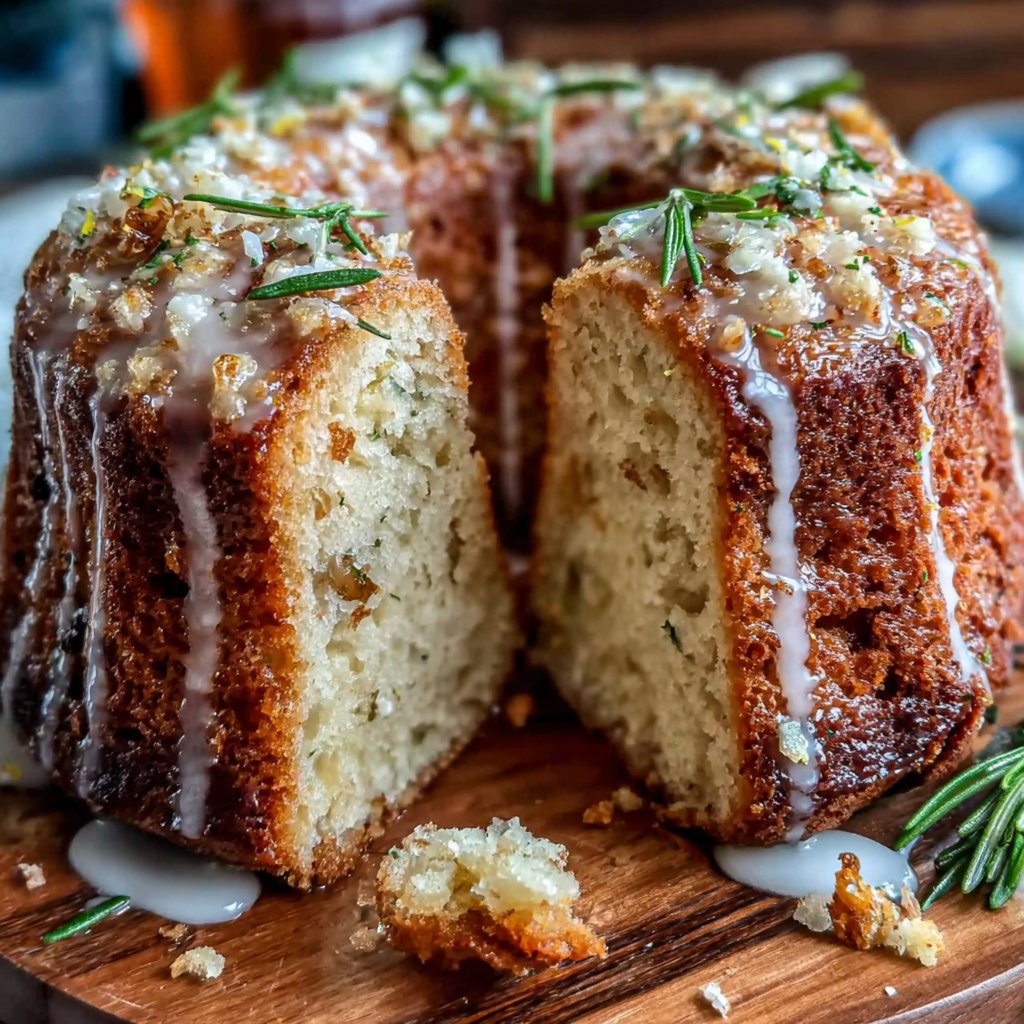
The blend of olive oil in this cake brings a unique moisture that keeps the crumb tender for days. Unlike traditional butter-based cakes, the olive oil contributes a subtle richness that enhances the overall flavor without overwhelming it. The fresh rosemary, finely chopped, infuses the cake with a delightful herbal note that sets this dessert apart. You’ll notice that each bite has a soft, slightly springy texture, beautifully harmonized by the zesty sweetness of lemon zest, making it a truly refreshing treat.
After baking, let the cake’s golden edges and lightly domed top cool completely. This cooling period is essential to fully develop the flavors. As the cake cools, it firms up slightly, allowing it to hold its shape when sliced. It’s important not to rush this step, as a warm cake can crumble easily and make it difficult for you to achieve those perfect slices for serving.
Tips for Perfecting the Glaze
To achieve a glossy, smooth glaze, ensure that your powdered sugar is lump-free. Sifting the sugar before mixing it with lemon juice can make a significant difference in achieving that silky texture. Adjust the consistency as needed; if the glaze is too thick, add a bit more lemon juice, one teaspoon at a time. Conversely, if it’s too thin, add a touch more powdered sugar until you reach the desired pourable yet thick consistency. This helps it drizzle beautifully over the cooled cake without sliding off immediately.
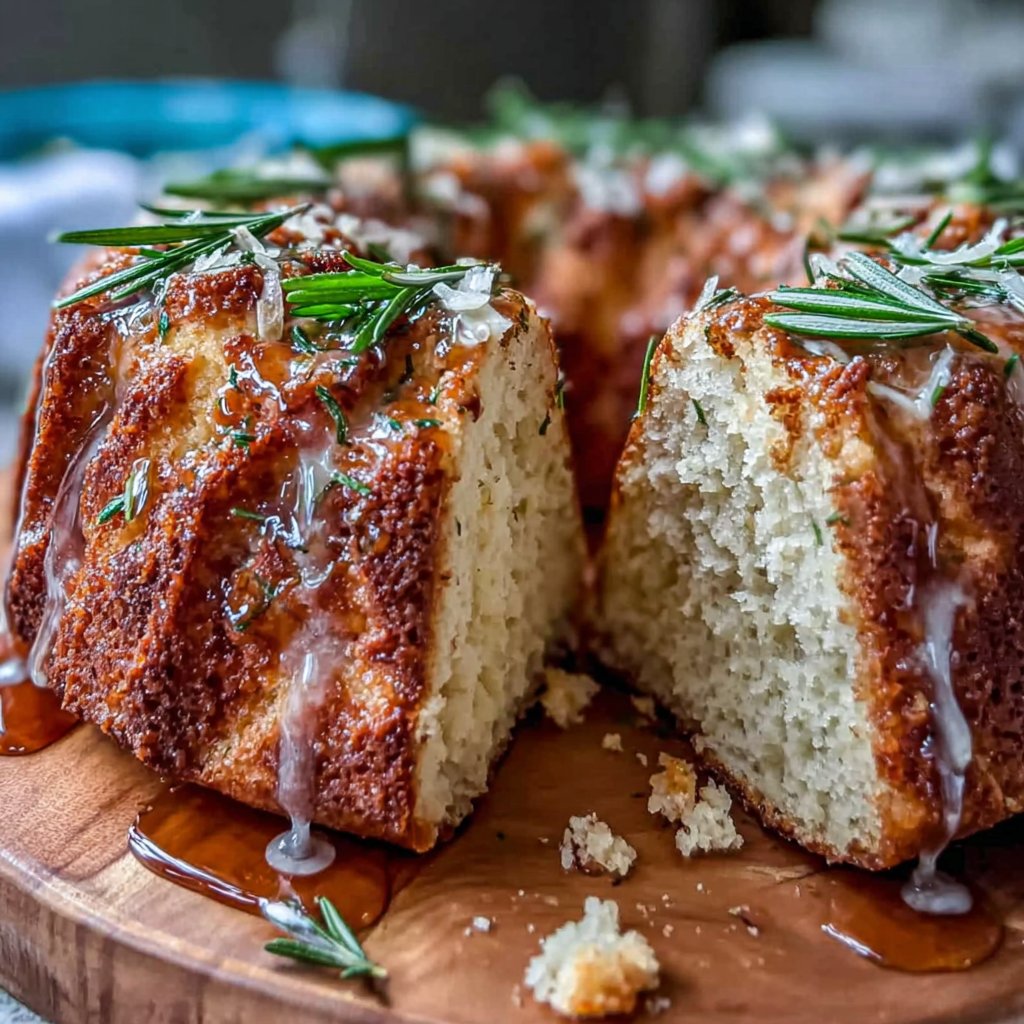
When applying the glaze, I recommend using a spoon to drizzle it over the center and let it flow down the sides. This technique not only creates a visually appealing finish but also ensures that every bite has a hint of that lemony goodness. Allow the glaze to set for at least 30 minutes before slicing; this waiting period helps develop a slightly tacky surface that enhances the overall presentation when served.
Serving and Storage Suggestions
This cake is incredibly versatile and can be enjoyed on its own or paired with complementary accompaniments. A dollop of lightly whipped cream or a scoop of vanilla ice cream can elevate the floral notes of the rosemary and the richness of the olive oil. Additionally, a sprinkle of toasted almonds on top before serving adds a delightful crunch and nutty flavor that contrasts beautifully with the cake’s soft texture.
For storage, wrap the cake tightly in plastic wrap and keep it at room temperature for up to three days, or refrigerate it for up to a week. If you want to make it ahead of time, this cake freezes well too. Just make sure it’s completely cooled before wrapping it securely in plastic and aluminum foil. When ready to enjoy, simply thaw it in the refrigerator overnight. Given its moist nature, this cake often tastes even better a day or two after baking as the flavors continue to meld.
Ingredients
Before you start baking, gather these fresh ingredients for an aromatic and flavorful cake.
For the Cake
- 1 cup extra virgin olive oil
- 1 cup granulated sugar
- 3 large eggs
- 1 cup buttermilk
- 2 cups all-purpose flour
- 1 tablespoon fresh rosemary, finely chopped
- 1 teaspoon baking powder
- 1 teaspoon baking soda
- 1/2 teaspoon salt
- Zest of 1 lemon
For the Glaze
- 1 cup powdered sugar
- 2 tablespoons lemon juice
- 1 teaspoon fresh rosemary, finely chopped
Now that you have all the ingredients, it's time to get started on the cake!
Instructions
Follow these simple steps to create your delicious Rosemary Olive Oil Spring Cake.
Preheat the Oven
Preheat your oven to 350°F (175°C). Grease and flour a 9-inch round cake pan.
Mix Wet Ingredients
In a large bowl, whisk together the olive oil and granulated sugar until well combined. Add the eggs one at a time, beating well after each addition. Then mix in the buttermilk and lemon zest.
Combine Dry Ingredients
In another bowl, sift together the flour, baking powder, baking soda, salt, and finely chopped rosemary.
Combine Mixtures
Gradually add the dry ingredients to the wet ingredients, mixing until just combined. Be careful not to overmix.
Bake the Cake
Pour the batter into the prepared cake pan and smooth the top with a spatula. Bake for 35-40 minutes or until a toothpick inserted into the center comes out clean.
Prepare the Glaze
While the cake cools, whisk together the powdered sugar, lemon juice, and finely chopped rosemary until smooth.
Glaze the Cake
Once the cake is completely cooled, drizzle the glaze over the top. Allow it to set before slicing.
Enjoy your delicious and fragrant Rosemary Olive Oil Spring Cake!
Pro Tips
- For an extra touch, consider garnishing the cake with additional rosemary sprigs or a dusting of powdered sugar before serving.
Ingredient Substitutions
If you don’t have buttermilk on hand, a simple substitute can be made by adding one tablespoon of white vinegar or lemon juice to a cup of milk. Let it sit for about five minutes until it curdles slightly. This mimics the tangy flavor of buttermilk and will help maintain the cake's moist texture.
For those who need a gluten-free option, you can substitute an all-purpose gluten-free flour blend in place of regular flour. Make sure your baking powder and other ingredients are also gluten-free to avoid cross-contamination. The result should yield a cake that’s just as delicious, maintaining the tender crumb.
Scaling the Recipe
This recipe can easily be doubled if you're hosting a larger gathering. Simply use a larger cake pan, such as a 9x13 inch dish, and increase the baking time by about 10-15 minutes. Be sure to perform the toothpick test around the 40-minute mark to ensure it’s fully baked, as larger cakes may require more time to cook through properly.
On the other hand, if you want to make a smaller version, you can halve the ingredients and bake it in a 6-inch round cake pan. The baking time will be shorter, likely around 25-30 minutes, so keep an eye on it. This smaller cake is perfect for an intimate gathering or for testing the recipe before serving to guests.
Questions About Recipes
→ Can I use dried rosemary instead of fresh?
Yes, but use it sparingly as dried herbs are more concentrated in flavor. About 1 teaspoon of dried rosemary is sufficient.
→ How should I store the cake?
Store the cake in an airtight container at room temperature for up to 5 days.
→ Can I make this cake gluten-free?
Certainly! Substitute the all-purpose flour with a gluten-free flour blend.
→ What can I use instead of buttermilk?
You can make a quick substitute by mixing 1 cup of milk with 1 tablespoon of vinegar or lemon juice and letting it sit for 5 minutes.
Rosemary Olive Oil Spring Cake
Created by: The Monicasrecipes Team
Recipe Type: Baking Ideas | Pastry & Pies
Skill Level: Intermediate
Final Quantity: 8 servings
What You'll Need
For the Cake
- 1 cup extra virgin olive oil
- 1 cup granulated sugar
- 3 large eggs
- 1 cup buttermilk
- 2 cups all-purpose flour
- 1 tablespoon fresh rosemary, finely chopped
- 1 teaspoon baking powder
- 1 teaspoon baking soda
- 1/2 teaspoon salt
- Zest of 1 lemon
For the Glaze
- 1 cup powdered sugar
- 2 tablespoons lemon juice
- 1 teaspoon fresh rosemary, finely chopped
How-To Steps
Preheat your oven to 350°F (175°C). Grease and flour a 9-inch round cake pan.
In a large bowl, whisk together the olive oil and granulated sugar until well combined. Add the eggs one at a time, beating well after each addition. Then mix in the buttermilk and lemon zest.
In another bowl, sift together the flour, baking powder, baking soda, salt, and finely chopped rosemary.
Gradually add the dry ingredients to the wet ingredients, mixing until just combined. Be careful not to overmix.
Pour the batter into the prepared cake pan and smooth the top with a spatula. Bake for 35-40 minutes or until a toothpick inserted into the center comes out clean.
While the cake cools, whisk together the powdered sugar, lemon juice, and finely chopped rosemary until smooth.
Once the cake is completely cooled, drizzle the glaze over the top. Allow it to set before slicing.
Extra Tips
- For an extra touch, consider garnishing the cake with additional rosemary sprigs or a dusting of powdered sugar before serving.
Nutritional Breakdown (Per Serving)
- Calories: 320 kcal
- Total Fat: 20g
- Saturated Fat: 3g
- Cholesterol: 65mg
- Sodium: 180mg
- Total Carbohydrates: 34g
- Dietary Fiber: 1g
- Sugars: 15g
- Protein: 4g